Living in a country with a hot climate means dealing with intense sun and high temperatures year-round. This presents a unique challenge for water storage. Finding a water tank that can withstand the heat without compromising the quality of the water inside is essential. Have you ever turned on the tap hoping for a refreshing drink only to get lukewarm water? This guide will explore the best water tank options for hot climates, helping you make an informed decision for reliable and cool water storage.
Why Hot Climate Conditions Are Challenging for Water Tanks
Hot climates place significant stress on any outdoor equipment, and your water tank is no exception. The combination of intense sunlight and high temperatures can seriously affect a tank’s durability and the water quality it maintains.
These harsh conditions can lead to everything from material degradation to the growth of harmful bacteria. To ensure optimal performance and a long lifespan for your water storage system, it’s vital to understand these specific challenges. We’ll look at the key factors you should consider when choosing a water tank for your home in a hot country.

Thermal Expansion Stress
When a water tank is exposed to high temperatures, the materials it’s made from expand. As the temperature cools down, the material contracts. This constant cycle of expansion and contraction puts immense stress on the tank’s structure. Over time, this thermal expansion stress can weaken the tank, leading to cracks, leaks, and a compromised structural integrity.
The amount of heat absorption plays a big role here. Darker colored tanks, for instance, absorb more sunlight and heat up faster, experiencing more significant temperature swings. This makes them more susceptible to damage in the long run.
Choosing a material with excellent durability is key to combating this issue. Materials that can withstand these temperature fluctuations without losing their shape or strength will have a much longer service life, ensuring your water tank remains a reliable storage solution even in extreme heat.
UV Degradation
The sun’s ultraviolet (UV) rays are a major threat to water tanks in hot climates. Continuous exposure to direct sunlight can break down the outer layer of many tank materials, especially certain plastics. This process, known as UV degradation, makes the material brittle and prone to cracking. Are UV-resistant water tanks essential in hot climate regions? Absolutely.
Without proper UV protection, the tank life can be significantly shortened. The damage isn’t just cosmetic; it affects the tank’s ability to hold water securely. A compromised outer layer can lead to leaks and complete structural failure.
To prevent this, look for tanks specifically designed with UV resistance. This often involves:
Using materials with inherent UV-blocking properties.
Adding a UV-resistant outer layer or coating.
Choosing lighter colors that reflect sunlight instead of absorbing it.
Water Temperature Rise
One of the most noticeable problems in hot climates is the rise in water temperature inside the tank. When a water tank absorbs heat from the sun and surrounding air, the stored water can become unpleasantly warm, or even hot. This hot water is far from refreshing for drinking or showering.
This increase in water temperature doesn’t just affect comfort; it impacts water quality. Warm, stagnant water is an ideal breeding ground for bacteria and algae. This can lead to contamination and potential health risks, defeating the purpose of storing safe, usable water.
To combat this, some households in hot climate countries use water coolers to reduce the water temperature before use. However, a more effective approach is to choose a tank material with good insulation properties that naturally keeps the water cooler, reducing the need for additional devices and energy consumption.
Sand & Dust Abrasion
In many hot climates, particularly arid or desert regions, sand and dust storms are common. The tiny, abrasive particles carried by the wind can act like sandpaper on the surface of your water tank. This constant sand and dust abrasion can wear away protective coatings and the outer layer of the tank itself over time.
This erosion can expose the underlying material to UV rays and other environmental elements, accelerating its degradation. A weakened surface is more likely to develop cracks and other forms of damage, reducing the tank’s lifespan and effectiveness.
When selecting a water tank, it’s important to consider its resilience to this type of wear. Key factors include:
A robust construction designed for harsh environmental conditions.
A smooth, hard outer surface that is less susceptible to abrasion.
Choosing a tank built to withstand these elements will help keep your water tank cool and functional for years to come.
Comparison of Common Water Tank Materials for Hot Climates
Choosing the right material for your water tank is the most critical decision you’ll make, especially in hot climates. Different materials react to heat, sunlight, and other environmental factors in very different ways. The best choice will offer a balance of durability, water quality protection, and structural integrity.
We will compare some of the most common water tank materials—plastic, galvanized steel, concrete, and GRP/SMC—to help you understand their strengths and weaknesses. This comparison will highlight factors like corrosion resistance and heat handling to determine which offers the best durability and performance in high temperatures.
HDPE / Plastic Water Tanks
Plastic tanks, particularly those made from High-Density Polyethylene (HDPE), are a popular choice for water storage tanks due to their affordability and lightweight nature. These polyethylene tanks are relatively easy to install and require low maintenance, making them a convenient option for many homeowners.
However, they have significant drawbacks in hot climates. Standard plastic tanks can be vulnerable to UV rays, which can cause the material to become brittle and crack over time unless they are specifically treated for UV resistance. They also tend to absorb heat, leading to warmer water temperatures and creating a favorable environment for algae growth.
When considering plastic vs. other materials like stainless steel, a few points stand out:
Plastic tanks can warp or lose structural strength under extreme, prolonged heat.
At high temperatures, some plastics risk leaching chemicals into the water.
Galvanized Steel Tanks
Galvanized steel water tanks are known for their strength and durability. The zinc coating provides good corrosion resistance, which helps protect the steel from rust. They are certainly a step up from basic plastic tanks in terms of structural integrity.
The main issue with steel tanks in hot climates is their high thermal conductivity. Metal is known for efficient heat transfer, meaning the tank will quickly absorb heat from the sun and transfer it to the water inside. This high heat absorption can make the stored water very warm, which is not ideal for most uses.
While strong, they are not immune to problems:
If the galvanized coating is scratched or damaged, rust can set in.
They are heavy and can be more difficult and costly to install.
Stainless steel is generally a better, though more expensive, option than galvanized steel due to its superior corrosion resistance and more hygienic surface.
Concrete Tanks
Concrete tanks have been used for water storage for a long time, often built underground. Their main advantage is their natural insulating properties, which can help keep water cooler than plastic or steel tanks. They are also very strong and have a long tank life if constructed properly.
However, concrete tanks are not without their problems. They are porous, and if not sealed correctly, they can leach lime into the water, affecting its pH and taste. Over time, they can also develop cracks due to ground movement or thermal stress, which can lead to leaks and water contamination.
Key considerations for concrete tanks include:
High initial cost and complex installation, as they are often built on-site.
The risk of cracks compromising structural integrity and requiring costly repairs.
Their high carbon footprint during production makes them a less sustainable choice compared to other options.
GRP / SMC Water Tanks (Recommended)
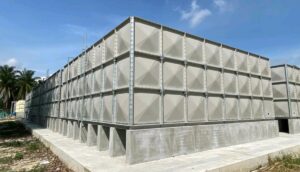
Glass Reinforced Plastic (GRP), also known as Sheet Molding Compound (SMC), is an advanced composite material that is exceptionally well-suited for water storage in hot climates. A GRP water tank combines the strength of glass fibers with the resilience of plastic resin, creating a superior storage solution.
These tanks are engineered to overcome the weaknesses of traditional materials. They offer excellent corrosion resistance, are not affected by UV rays, and have low thermal conductivity, which helps maintain cooler water temperatures. This makes them ideal for hygienic water storage, as they inhibit the growth of algae and bacteria.
Why are GRP/SMC tanks the most suitable choice?
They are modular, allowing for flexible sizing and easy installation, even in tight spaces.
They have a smooth, non-porous internal surface that prevents contamination.
Their durability and resistance to environmental stressors make them a long-lasting, low-maintenance option.
GRP / SMC water tanks are widely considered the optimal solution for hot climate regions.
If you are evaluating options for a desert or high-temperature project, you may review our detailed GRP Water Tank Specifications here.
Why GRP / SMC Tanks Perform Best in Hot Climates
So, what makes a GRP water tank the best choice for hot regions? It comes down to a unique combination of properties that directly address the challenges posed by high heat and intense sun. While other materials struggle with issues like warping, corrosion, or heat absorption, SMC tanks are specifically engineered for superior performance in these conditions.
Their inherent heat resistance, UV stability, and insulating qualities ensure that your water stays safe and cool. Let’s explore the specific features that make a GRP/SMC tank the clear winner for keeping your water tank cool and reliable.
Excellent Heat Resistance
One of the standout features of a GRP water tank is its remarkable heat resistance. Unlike plastic tanks that can soften, warp, or lose their shape under high temperatures, GRP maintains its structural integrity even in extreme heat. This is because the composite material is designed to withstand a wide range of temperatures without degrading.
This stability is crucial for ensuring the tank’s longevity and optimal performance. You can trust that a GRP tank won’t fail due to the thermal stress that is so common in hot climates. This makes it the most durable material for a water tank in extreme heat.
Key benefits of its heat resistance include:
No risk of warping or deformation under direct sunlight.
Maintains its strength and durability over many years.
Ensures a secure and leak-free water storage system.
Superior UV Resistance
As we’ve discussed, UV rays from direct sunlight can be incredibly damaging to many materials. A GRP water tank is manufactured with inherent UV resistance, meaning it is not susceptible to the degradation that plagues many plastic tanks. This protection is built into the material itself, not just applied as a coating that can wear off.
This superior UV resistance is essential in hot, sunny regions, as it directly contributes to a longer tank life. The tank’s surface will not become brittle or crack from sun exposure, ensuring it remains strong and reliable for decades. This feature answers the question of whether UV-resistant tanks are essential—for hot climates, they absolutely are.
The advantages of this UV stability include:
Protection against material breakdown from sun exposure.
A longer, more reliable service life for the tank.
Reduced maintenance costs, as there’s no need for protective coatings or early replacement.
Low Thermal Conductivity
A key factor in keeping stored water cool is preventing heat from the outside from getting in. GRP has low thermal conductivity, which means it is a poor conductor of heat. Unlike metal tanks that allow for efficient heat transfer, a GRP tank acts as a natural insulator, significantly slowing down heat absorption from the environment.
This property is a major advantage in hot climates, as it helps maintain cooler water temperatures. You’ll get more refreshing water from your tap and reduce the risk of bacteria and algae growth that thrive in warm water. This natural insulation keeps your water tank cool without needing extra materials or energy.
The benefits of low thermal conductivity are clear:
It naturally keeps water cooler, even on the hottest days.
Placement can still impact effectiveness, but GRP’s insulating properties provide a strong starting advantage over other materials.
Corrosion-Free Structure
Metal tanks, even galvanized ones, are always at risk of corrosion. Scratches, exposure to certain minerals in the water, or simply the passage of time can lead to rust, which compromises water quality and the tank’s structure. A GRP water tank, on the other hand, is completely immune to corrosion.
The composite material does not react with water or air, so it will never rust. This exceptional corrosion resistance ensures a long tank life with very low maintenance. You won’t have to worry about inspecting for rust, applying protective coatings, or dealing with leaks caused by corrosion.
This makes GRP tanks a highly sustainable choice for a few reasons:
Their long lifespan means fewer replacements and less waste.
They require minimal maintenance, saving resources over time. This durability and lack of chemical reaction make GRP a smart, long-term investment.
Modular & Large Capacity
Another significant advantage of GRP tanks is their modular design. These modular tanks are constructed from standardized panels that are assembled on-site. This allows for incredible flexibility in tank size and shape, making them suitable for a wide range of applications, from residential homes to large-scale industrial applications.
This design makes for a surprisingly easy installation process, even in locations with limited access, like rooftops or basements. The panels are lightweight and can be carried through standard doorways, then bolted together to create a large capacity tank tailored to your specific needs.
When considering a tank for your home, this modularity offers several benefits:
You can get the exact tank size you need, without being limited to pre-made dimensions.
Installation is faster and less disruptive than for concrete or large steel tanks.
Future expansion is possible by simply adding more panels.
Real-World Applications in Hot Regions
GRP/SMC water storage tanks have proven their worth in some of the world’s most demanding hot-weather environments. In the Middle East and parts of Asia, where high temperatures are a daily reality, these tanks are the standard for both commercial and industrial applications. They are widely used in hospitals, hotels, and food processing plants where storing safe, potable water is non-negotiable. Their ability to maintain water quality under extreme heat makes them the most suitable water tank for these critical uses.
From providing drinking water for residential communities to supplying temperature-stable water for industrial processes, GRP tanks consistently deliver reliable performance. Their successful implementation across various sectors in hot regions demonstrates their superiority over other materials. Whether for a small commercial building or a large industrial facility, GRP tanks provide a dependable solution for managing water storage in challenging climates.
Life Cycle Cost Comparison
When choosing a water storage solution, it’s tempting to only look at the upfront price. However, the true cost of a tank is revealed over its entire life cycle. This includes the initial purchase, installation, maintenance, repairs, and eventual replacement. While some tanks may be cheaper initially, they can end up costing more in the long run. GRP tanks, despite a potentially higher initial investment, offer significant long-term cost savings due to their long tank life, low maintenance needs, and exceptional durability.
This makes them a very sustainable choice. A tank that lasts for decades and requires minimal upkeep has a much lower environmental and financial impact over time. The following table provides a general comparison of the life cycle costs for different tank materials.
Feature | GRP/SMC Tank | Plastic (HDPE) Tank | Galvanized Steel Tank | Concrete Tank |
|---|---|---|---|---|
Initial Cost | Moderate to High | Low | Moderate | High |
Lifespan | 30+ years | 5-15 years | 15-25 years | 20-40 years |
Maintenance | Very Low | Low to Moderate | Moderate | High (Crack Repairs) |
Durability | Excellent | Fair | Good | Good (Prone to cracks) |
Long-Term Value | Excellent | Poor | Fair | Fair to Good |
For commercial or municipal projects in hot regions, selecting the right tank material can reduce lifecycle costs by 30–50%.
Need help calculating the required tank capacity for your project?
Our engineers can provide:
Capacity recommendation
Load analysis
Structural layout drawing
Budget estimation
How to Choose the Right GRP Tank Supplier
Once you’ve decided that a GRP water tank is the right choice for you, the next step is to find a reliable supplier. The quality of the tank panels, the precision of the manufacturing, and the expertise of the installation team all play a crucial role in the tank’s performance and longevity. Choosing the right supplier is just as important as choosing the right material.
To ensure you get the right tank that meets your specific needs and delivers optimal performance, take the time to research potential suppliers. Look for companies with a proven track record, positive customer reviews, and proper certifications. When evaluating suppliers for your home or business, consider the following factors:
Certifications: Ensure the supplier’s products meet international quality and safety standards for potable water.
Experience: Choose a company with extensive experience in manufacturing and installing GRP tanks in hot climates.
Warranty: A strong warranty is a good indicator of the supplier’s confidence in their product’s durability.
Customer Support: Look for a supplier that offers excellent support, from initial consultation to after-sales service.
Conclusion
In summary, selecting the right water tank for hot climates is crucial for maintaining water quality and longevity. With challenges like thermal expansion, UV degradation, and rising water temperatures, it’s essential to opt for materials that can withstand these conditions. GRP/SMC tanks have proven to be the best choice due to their excellent heat resistance, superior UV protection, and corrosion-free structure. By investing in a high-quality tank, you’re ensuring a reliable water supply even in the harshest environments. If you’re ready to make an informed decision, get quotes from trusted suppliers to find the perfect tank for your needs.
Project Consultation
If you are planning a project in a hot climate country and need:
Long-lasting outdoor water storage
Large-capacity modular tanks
UV-resistant and corrosion-free solutions
Contact our engineering team for a customized GRP / SMC water tank solution.
We provide:
Free project sizing calculation
Technical drawings
Load analysis
Installation guidance
Competitive factory pricing
Explore our detailed product here:
Frequently Asked Questions
Are insulated water tanks necessary for hot climates?
Yes, insulated water tanks or those with natural thermal insulation, like GRP, are highly recommended. They help keep the water tank cool by preventing heat from the sun from raising water temperatures. This ensures you have access to cooler water and reduces the risk of bacterial growth.
Does the tank color really affect water temperature?
Yes, color makes a big difference. Darker colors absorb more heat from direct sunlight, warming the water inside. Lighter-colored tanks reflect more sunlight, reducing heat absorption and helping to keep the water cooler. A light-colored outer layer is a simple but effective feature.
What is the most durable material for a water tank in extreme heat?
The most durable material is Glass Reinforced Plastic (GRP/SMC). A GRP water tank is engineered to withstand high temperatures without warping, maintaining its structural integrity. Its excellent tank durability and corrosion resistance make it ideal for extreme heat and harsh environmental conditions.